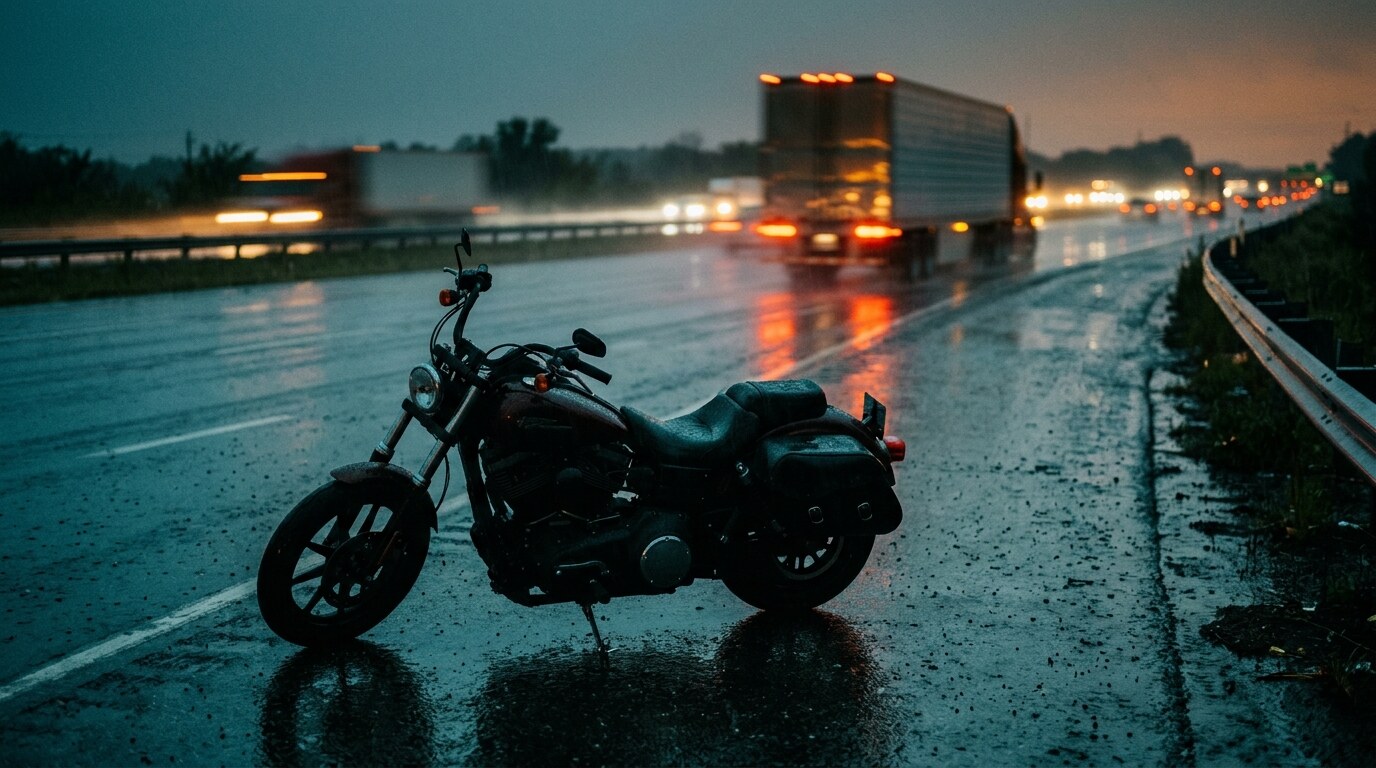
The left-turn collision is the single most common way a motorcyclist gets killed, and it is also the case defense counsel most enjoys defending. A car turns left across the rider's path, the rider strikes the passenger door or front quarter panel, and the driver offers the line every motorcycle lawyer has heard a hundred times: I never saw him. That sentence sounds like an admission. Handled carelessly, it becomes the defense theory, recast as a story about a rider who was invisible, speeding, or riding where no reasonable driver would expect him.
The duty runs against the driver
Start from the statute. The motorcycle traveling straight through an intersection almost always has the right of way over a vehicle turning left, and the turning driver carries the duty to yield until the turn can be made safely. A driver does not discharge that duty by failing to look, and does not earn a pass because the oncoming vehicle was small. The obligation is to see what is there to be seen. Frame the case around that duty early, in the complaint and in the first deposition, so the jury hears the rules of the road before it ever hears the excuse.
What conspicuity really argues
The conspicuity defense is a comparative-fault play dressed as physics. The driver claims the rider was hard to see: dark gear, no daytime running light, a low-contrast background, dawn or dusk glare. Some of that reflects real human-factors science. Riders present a narrow frontal profile, and an approaching single headlight can read as farther away and slower than it is, a size-arrival effect that lets a driver misjudge the gap. None of it relieves the driver of the duty to yield. The argument, properly cabined, goes to the percentage on the verdict form, not to whether the driver breached.
Building the record before the defense frames it
Conspicuity fights are won with evidence gathered in the first weeks, not with argument at trial.
- Headlight and lighting proof. Photograph the bike's headlight, running lights, and reflectors, and confirm they were on and functional. Most modern motorcycles run headlights that cannot be switched off, and that fact alone deflates the dark-and-invisible theory.
- Signal and phase timing. Pull the intersection's signal timing and any event-data-recorder or infotainment data from the car. Establishing when the light changed and when the driver began the turn often shows the rider was already committed to the intersection.
- Sight-line reconstruction. A reconstructionist can map the driver's available sight distance and the seconds of visibility the rider occupied. If the rider was visible for four or five seconds, the failure to see is a failure to look.
- Speed rebuttal. Defense will pair conspicuity with a speeding claim to stack fault. Skid, crush, and throw-distance analysis, backed by recorder speed where available, keeps that number honest.
Neutralizing the human-factors expert
When the defense hires a perception-reaction expert, do not fight the science. Concede that riders can be harder to detect, then turn it: a reasonable driver who knows small vehicles are harder to see owes a heightened duty to look twice before turning across oncoming traffic. The expert's own literature usually says drivers can detect motorcycles when they scan properly, which means the driver's error was scanning, not the rider's gear. Use the expert to prove the driver had time and failed to use it.
A driver's admission that he never saw the motorcycle is not a defense. In a left-turn case it is often the clearest evidence that he never looked.
Comparative fault and the venue reality
In a pure comparative state the conspicuity argument only chips at the recovery, so the defense uses it to drag the rider's share upward. In a modified state that crosses a bar at 50 or 51 percent, the same argument is existential, and the lighting and sight-line proof above becomes the difference between a full case and a dismissed one. Know which rule governs before you value the file. For the intersecting evidence issues that carry over from car cases, our auto accident coverage tracks recorder and telematics practice, and our truck and motorcycle reporting follows the comparative-fault rulings that decide these cases.
The through-line is simple. Anchor the case on the duty to yield, gather the lighting and timing proof before it disappears, and refuse to let the driver's excuse become the story. See our continuing case law analysis for the appellate decisions shaping how far the conspicuity defense can go.