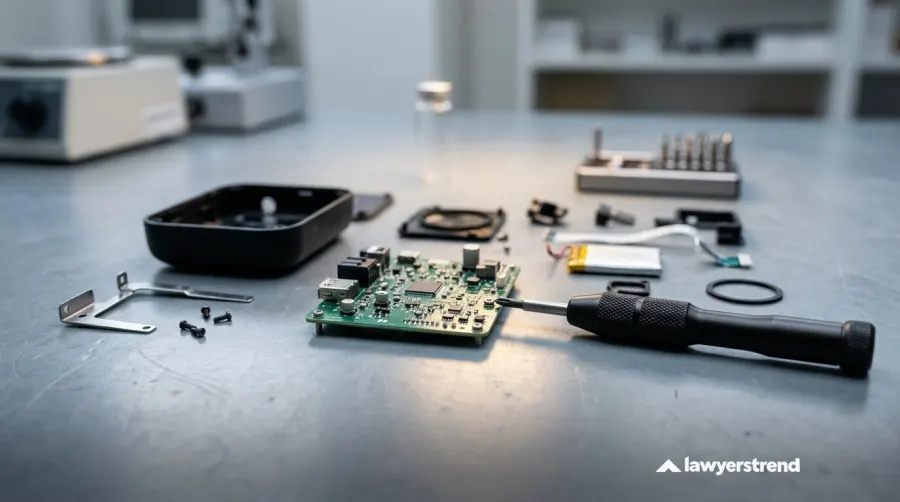
Modern products are assemblies. A power tool contains a motor, a switch, a battery pack, and a control board from four different suppliers. A vehicle seat contains a recliner mechanism, a frame, and an airbag module, none of which the automaker built. When a product fails and injures someone, the finished-product manufacturer is the obvious defendant, but it is not always the one with the money, the knowledge, or the actual defect. Component suppliers are frequently the right target, and they have a well-developed defense designed to keep them out.
The component part doctrine
The leading formulation is Section 5 of the Restatement (Third) of Torts: Products Liability. Under it, a seller of a component is liable for harm caused by a product into which the component is integrated if either of two conditions is met:
- The component itself is defective, meaning it had a manufacturing defect, a design defect, or inadequate warnings judged as a component, and that defect caused the harm; or
- The component seller substantially participated in integrating the component into the design of the finished product, the integration caused the product to be defective, and the defect caused the harm.
The policy rationale is that component suppliers, especially of generic or multi-use parts, cannot be expected to evaluate every end use. A supplier of standard bolts should not answer for a poorly designed machine that happened to use them. Many states have adopted Section 5 by name; others apply similar principles through the raw-material supplier doctrine, the bulk supplier doctrine, or the sophisticated-purchaser defense.
Route one: the component was defective in itself
The first route requires showing that the part was defective independent of how it was used. That is often achievable. A battery cell with an internal separator flaw, a weld on a bracket that failed metallurgical testing, or a valve that did not meet its own published specification is defective as a component.
Building this route requires disciplined evidence work:
- Identify the part precisely. Part numbers, lot codes, and date stamps on the failed component tie it to a specific supplier and production run. Without that, the supplier will argue the part could have come from a second source.
- Obtain the supply agreement and specifications. The finished-product manufacturer's purchase specifications define what the component was supposed to do. A part that failed to meet its own specification is a strong manufacturing defect case.
- Compare with exemplar parts. Testing unused parts from the same lot can distinguish a one-off manufacturing defect from a design flaw shared across production.
- Review supplier quality records. Corrective action reports, field return analyses, and customer complaints the supplier received from other manufacturers often reveal known failure modes.
Route two: substantial participation in integration
The second route applies when the part was not defective standing alone but became dangerous as integrated. Here the question is how deeply the supplier participated in the finished product's design.
Suppliers of custom or engineered components frequently participate heavily. They attend design reviews, propose mounting configurations, run validation testing in the customer's application, and approve the final integration. Discovery should target:
- Engineering correspondence between supplier and manufacturer.
- Design review meeting minutes and presentations.
- Application engineering files, including any testing the supplier ran in the finished product.
- Change requests and who initiated them.
- Warranty and indemnity provisions in the supply agreement, which often reveal how the parties themselves allocated design responsibility.
A supplier that recommended the mounting location that exposed its part to heat, or approved a design change that removed a safety margin, has substantially participated. A supplier that simply filled a catalog order has not.
Warning claims against component suppliers
Failure-to-warn claims against component suppliers face a particular obstacle. The supplier typically has no direct relationship with end users and no practical way to put a warning on the finished product. Courts often hold that a component supplier satisfies its warning duty by warning the manufacturer, particularly when the manufacturer is sophisticated. The sophisticated purchaser and sophisticated intermediary doctrines extend this logic.
The best warning cases against suppliers involve known hazards the supplier failed to disclose even to the manufacturer: a known failure mode buried in internal testing, or a field problem reported by other customers and never shared. Supplier-to-manufacturer communications are therefore the critical discovery target.
Practical sequencing
Component cases depend on preserving and testing the failed product under a protocol that all potential defendants agree to, because destructive disassembly can alter or destroy evidence. Identify potential component suppliers before any teardown, give them notice, and invite participation. A supplier that was offered the opportunity to attend and declined has a much weaker spoliation argument later.
Jurisdictional questions also matter. Component suppliers are frequently foreign manufacturers, and specific jurisdiction requires connecting the supplier's conduct to the forum. Distribution agreements and evidence that the supplier knew its parts were incorporated into products sold in the forum state are central. Our product liability section has covered jurisdictional strategy against out-of-state manufacturers, and appellate decisions on supplier liability are tracked under case law and settlements.
Why the supplier matters
Plaintiffs sometimes skip component suppliers because the finished-product manufacturer appears adequate. That calculation misses several points. The manufacturer may be insolvent, bankrupt, or minimally insured. It may have a credible defense that it relied on the supplier's specifications. And once sued, the manufacturer will likely bring the supplier in through cross-complaint anyway, often on terms less favorable to the plaintiff. Naming the supplier directly, with a theory grounded in either the part's own defect or the supplier's integration role, gives the plaintiff control of that fight.
The bottom line
The component part doctrine protects suppliers of generic parts who had no say in the finished design. It does not protect suppliers whose parts were defective or who helped engineer the defect into the product. The difference shows up in specifications, quality records, and engineering correspondence, all of which are discoverable. Identify the supplier early, preserve the part, and plead the route the evidence supports.