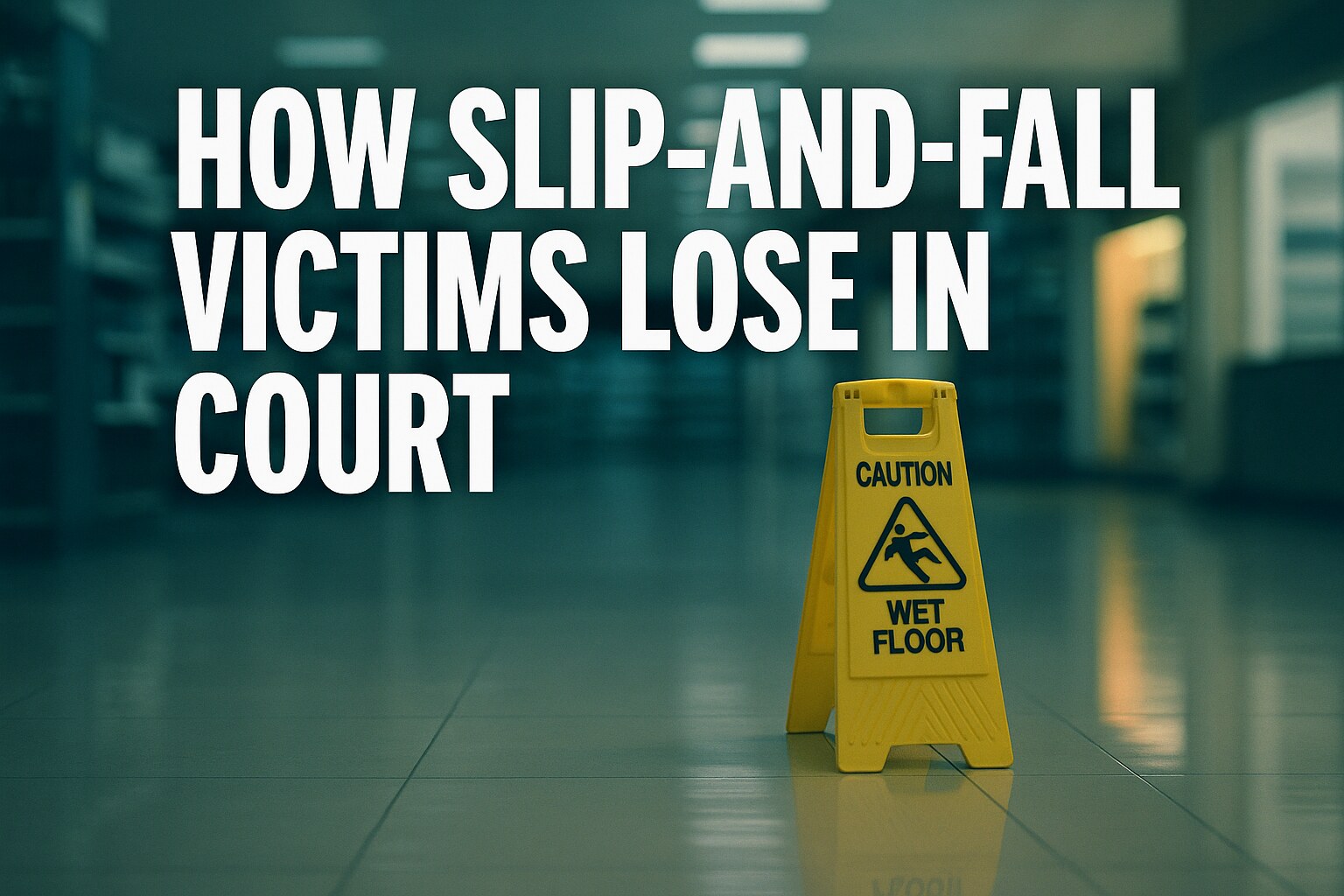
Big-Box Retail Slip-and-Fall: Notice, Mode of Operation, and Winning the Discovery Fight
Warehouse-format retailers generate a distinctive hazard profile: open liquid containers, produce debris, hydraulic fluid, and forklift tra…
Premises liability, mode-of-operation
Warehouse-format retailers generate a distinctive hazard profile: open liquid containers, produce debris, hydraulic fluid, and forklift tra…
Professional sports venues and arenas combine high foot traffic, alcohol service, and dense crowd conditions to create a distinctive premis…
Multi-unit residential properties present a distinct notice framework, a broad class of potential plaintiffs, and specific evidence categor…
Airport slip-and-fall cases involve a layered defendant structure, including the airport authority, terminal operators, airlines, concessio…

Fitness center falls present a distinct premises-liability profile: water migration from pools and showers, rubber flooring transitions, fr…

Restaurants generate slip-and-fall claims at high frequency but come to court with well-prepared defenses. The mode of operation doctrine a…

Wet pool decks are inherently slippery, yet defendants still assert notice defenses. This guide covers how plaintiff counsel establishes li…

A wet floor sign does not automatically defeat a retail slip-and-fall claim. Here is how to challenge sign placement, timing, and visibilit…

Escalator and elevator injury cases carry multiple defendants, a specific federal safety code standard of care, and maintenance records tha…

Parking lot injury cases involve a distinct set of notice and duty questions that diverge from interior slip-and-fall practice. The duty to…

When a property owner's inaccessible design violates the ADA, that statutory failure can satisfy the breach element in a premises liability…

When a plaintiff cannot pin down how long a specific puddle sat on the floor, the recurring condition doctrine lets a jury infer notice fro…