Every plaintiff lawyer who has closed a case at mediation has also seen one nearly come apart afterward. The defense claims the term sheet was only a framework. The carrier says the lien language was never agreed to. Or, in the worst version, your own former client sues you for malpractice over advice you gave in the hallway between caucus sessions. Every one of those disputes runs into the same wall: Evidence Code sections 1115 through 1129, and a California Supreme Court that has spent more than two decades refusing to put holes in it.
The defining case is Cassel v. Superior Court (2011) 51 Cal.4th 113, and in the fifteen years since, the cases that followed it have mostly confirmed how little room is left. The openings that do exist are statutory, narrow, and easy to lose through careless drafting.
The Statutory Core and the Court's Literal Reading
Evidence Code section 1119 does the heavy lifting. Anything said, and any writing prepared, "for the purpose of, in the course of, or pursuant to" a mediation or mediation consultation is inadmissible and protected from discovery in any later civil action, and all communications among participants stay confidential.
The Supreme Court set its interpretive approach early. In Foxgate Homeowners' Assn. v. Bramalea California, Inc. (2001) 26 Cal.4th 1, it rejected a judicially created exception that would have let a mediator report one side's bad-faith conduct to support sanctions. Three years later, Rojas v. Superior Court (2004) 33 Cal.4th 407 extended the protection to photographs, witness statements, and expert compilations prepared for mediation, even where the opposing side could not get the same material any other way. In Fair v. Bakhtiari (2006) 40 Cal.4th 189 and Simmons v. Ghaderi (2008) 44 Cal.4th 570, the court rejected implied-agreement and estoppel workarounds. If the Legislature did not write the exception, the court will not invent it.
Cassel: The Privilege Turned Against the Client
Cassel showed what that literalism costs. The client sued his own lawyers, claiming they pressured him into a low settlement during mediation through exhaustion, threats to withdraw, and misrepresentations about the deal. He was not trying to undo the settlement. He wanted to prove what his counsel told him, privately, during and just before the session. The court held those attorney-client communications were "for the purpose of" or "in the course of" mediation and therefore inadmissible, even though no opposing party heard them and the client himself wanted the evidence in.
The majority admitted the result could leave clients without a practical malpractice remedy, and invited the Legislature to act. Justice Chin concurred with obvious reluctance. After Cassel, Amis v. Greenberg Traurig LLP (2015) 235 Cal.App.4th 331 affirmed summary judgment for a defendant law firm because the plaintiff could not prove causation without the very mediation communications the statute excluded.
For a plaintiff firm, the lesson cuts both ways. The privilege protects your candid assessment of a client's case from discovery, and it means a malpractice theory built on mediation-day advice usually has nowhere to go.
The Legislative Response: Section 1129 Disclosure, Not an Exception
After years of study, the California Law Revision Commission recommended a targeted exception allowing evidence of attorney misconduct during mediation in malpractice and State Bar proceedings. The Legislature chose a different route. Senate Bill 954, effective January 1, 2019, added Evidence Code section 1129. Before a client agrees to participate in mediation, counsel must give the client a printed disclosure explaining the confidentiality restrictions, and the client must sign an acknowledgment. The disclosure has to be on a separate page, in at least 12-point font, and in the client's preferred language.
Two features of section 1129 matter in practice. First, it does not apply to class or representative actions. Second, an attorney's failure to comply does not make any mediation communication admissible. The statute creates a professional obligation, not an evidentiary exception. Cassel remains good law; the client is simply supposed to be told about it in advance.
Build the form into intake or your pre-mediation checklist, and keep the signed copy in the file.
The Carve-Outs That Actually Work
Section 1123: The Signed Written Settlement
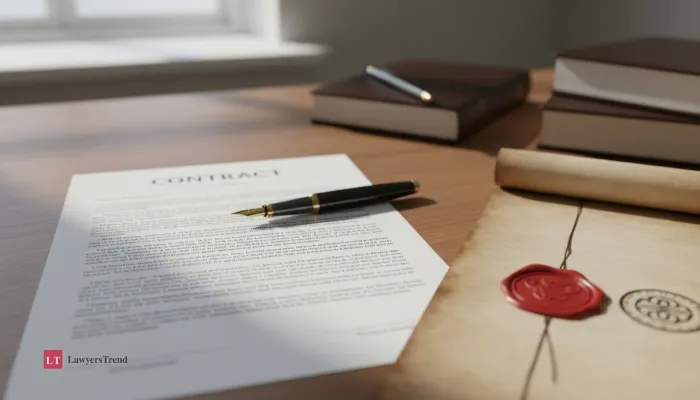
This is the exception that matters most to settling plaintiffs. A written settlement agreement prepared during mediation is admissible if it is signed by the settling parties and meets one of several conditions, most commonly that it states it is admissible, or "enforceable or binding or words to that effect." Fair v. Bakhtiari shows what happens when that language is missing. A handwritten settlement memo with an arbitration clause was held insufficient, because an agreement to arbitrate disputes is not the same as a statement that the document itself is binding. The deal could not be proved.
The fix is mechanical. Every term sheet should carry an express clause stating that it is binding, enforceable, and admissible under Evidence Code section 1123 and enforceable under Code of Civil Procedure section 664.6. Then have the parties sign it. Since the 2021 amendment to section 664.6, attorney signatures can satisfy the enforcement statute, but section 1123 still speaks of signatures by the settling parties, so the cautious practice is to get the clients' signatures on the page before anyone leaves the building.
Section 1124: Oral Agreements
Oral settlements reached in mediation are admissible only if they are recorded by a court reporter or reliable recording device, recited on the record, and then reduced to a signed writing within 72 hours, among other requirements. If you cannot get a signed writing, get a reporter.
Section 1120: Evidence That Exists Independently
Evidence "otherwise admissible or subject to discovery" does not become protected just because someone used it at mediation. Medical records, billing ledgers, and incident reports keep their ordinary discoverability. The line is between the underlying fact or document, which stays reachable, and the mediation-specific version of it, such as a demand package's narrative, an expert's mediation-only summary, or a damages chart built for the session, which does not. If the defense tries to shelter a document from a subpoena by claiming it was "prepared for mediation," the questions are when and why it was created. Our earlier piece on third-party discovery subpoenas, objections, and enforcement covers the motion practice for those fights.
Section 1122: Express Waiver by All Participants
Communications can be disclosed if all mediation participants expressly agree in writing or orally under section 1124's procedures. "All participants" includes the mediator for some purposes. Courts have rejected implied waiver. A unilateral waiver by the party who wants the evidence is not enough.
The Federal Court Gap
California's statutes are not absolute once a case moves to federal court. In diversity cases, state privilege law applies under Federal Rule of Evidence 501, so sections 1115 through 1129 generally govern. In federal question cases, federal common law controls. The Ninth Circuit in Facebook, Inc. v. Pacific Northwest Software, Inc. (9th Cir. 2011) 640 F.3d 1034 enforced a mediated term sheet and declined to apply California's mediation confidentiality rules to exclude evidence of the negotiations on the fraud claim.
Mass tort and MDL settlements, including the global programs we have tracked in pieces like the Uber MDL bellwether settlement, are frequently negotiated in federal forums with mediators appointed by the court. If the claims include federal causes of action, do not assume the California rules will hold. Draft the confidentiality terms as a contract rather than relying on the Evidence Code alone.
Drafting Around the Rules You Cannot Change
Because courts will not create exceptions, the practical protection lies in the documents you control.
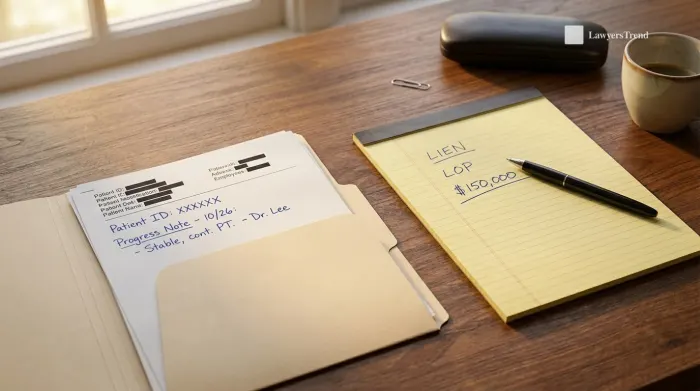
Lien terms belong in the signed term sheet. If the lien allocation is not in the section 1123 writing, the negotiations that produced it are probably inadmissible. Spell out the allocation, any holdback, and who negotiates reductions. Our coverage of Medicare Advantage reimbursement claims in PI settlements walks through the terms worth fixing on mediation day.
Watch for references at trial. Under Evidence Code section 1128, any reference to a mediation during a later trial is an irregularity in the proceedings for purposes of a new trial motion. If defense counsel tells the jury the plaintiff "already tried to settle this," object and make your record.
Closing Observation
The Supreme Court has said repeatedly that the cost of mediation confidentiality is a policy choice for the Legislature, and the Legislature has answered with a disclosure form rather than an exception. That leaves practitioners with a closed system and a few marked exits. The settlements that hold up are the ones where counsel used those exits on purpose: a signed section 1123 writing with the right words, lien terms on the page, a signed section 1129 acknowledgment in the file, and a clear sense of whether the forum is applying California law at all.