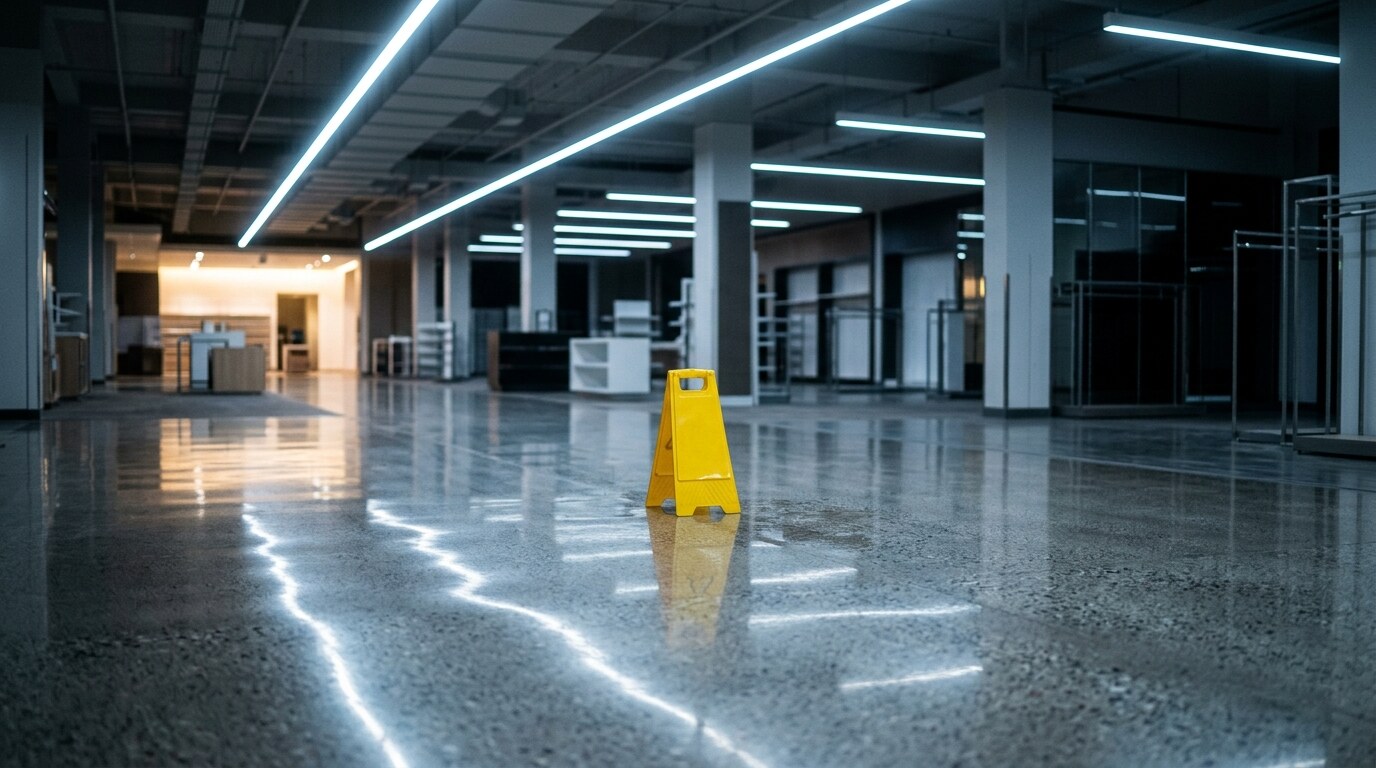
Airport terminals generate a steady volume of premises-liability claims from falls on wet terminal floors, poorly maintained jet bridges, tracked-in rain water near terminal entrances, and floor transitions between carpeted gate areas and polished tile in concourses. These cases are complicated by the multi-party structure of airport operations, which distributes maintenance and control responsibilities across the airport authority, airline tenants, concessionaires, and cleaning contractors in ways that require careful defendant identification at the outset of any claim.
Who Controls the Floor You Fell On?
Airport terminal premises liability begins with a control analysis. The airport authority, typically a public entity or quasi-public authority, owns the facility and retains control over certain common areas, but leases space to airlines and concessionaires under agreements that often assign maintenance responsibility for the leased areas to the tenant. A fall in an airline's gate area may involve the airline as the responsible leaseholder rather than the airport authority. A fall in a retail concessionaire's storefront may involve the concessionaire. A fall in a ticketing hall common area maintained by the airport's janitorial contractor may involve both the airport authority and the cleaning company under an independent contractor negligence theory.
Obtaining a copy of the airport's master lease agreements with the relevant tenant and the airport's concession and janitorial service contracts should be among the first discovery actions. The lease will define the precise boundaries of each party's maintenance responsibility, and the cleaning contractor's agreement will specify the cleaning frequency, inspection schedule, and reporting obligation for hazardous conditions in covered areas.
The Government Entity Dimension
Most major commercial airports are operated by public entities: port authorities, municipal aviation departments, or regional airport authorities. A slip-and-fall against a public airport operator is subject to a government tort claims presentation requirement, which in California runs six months from the date of injury. Missing the claims filing deadline bars the action against the government entity with limited exceptions. Even when the government entity's own maintenance responsibility for the specific hazard location is uncertain, file a timely tort claim against the authority as a protective measure while the responsibility investigation continues.
Government immunity defenses are less frequently available in airport fall cases than in highway cases, because airport facility maintenance is ministerial rather than discretionary in most contexts. A public airport that failed to maintain an interior floor surface or respond to a known water accumulation hazard is not exercising a discretionary governmental function in the way that a road design decision is. The discretionary immunity argument, while always worth evaluating, rarely disposes of the entire airport fall case.
Notice in a High-Turnover Facility
Constructive notice in airport cases depends on the cleaning and inspection schedule for the specific area and the nature of the hazard. Rain-tracked water near terminal entrance doors is a recurring and foreseeable condition any time it rains. Where the airport's own operations records show that there was precipitation on the day of the fall, the argument that tracked-in water was a foreseeable hazard requires no independent proof of notice: the condition arises predictably from the environment. Many courts treat this as a mode-of-operation style analysis for entry points during rain events.
For spills in a food and beverage concession area, traditional constructive notice proof applies: the spill must have existed for a sufficient time that a reasonably attentive employee should have discovered it during routine inspection. The concession's internal inspection log (if it maintains one) and employee scheduling records establish whether the spill had been present longer than the inspection interval. Surveillance cameras are present throughout airport concourses and are among the most important preservation targets in airport fall cases.
Jet Bridge and Boarding Area Falls
Falls on jet bridges present a specific liability profile. The airline operating the flight typically has control over and responsibility for the jet bridge during boarding and deplaning. Jet bridge falls from worn non-slip surfaces, broken deck plates, or inadequate lighting during overnight operations are a recurring claim type. The airline's maintenance records for the specific jet bridge, the passenger loading bridge manufacturer's inspection requirements, and the airport authority's lease provisions governing jet bridge maintenance are all relevant to the liability and comparative fault analysis.
For premises liability resources including constructive notice proof and surveillance preservation, see slip-and-fall practice resources. Where the airport fall involves a public entity defendant, the government tort claims analysis is addressed at auto-accident litigation resources on government entity liability frameworks.