Most plaintiff PI firms don't train first-year associates on purpose. They give them a caseload, assume law school and the bar exam covered the basics, and find the gaps when a policy-limits demand goes out with no acceptance deadline or a client freezes in deposition because nobody prepared them for the prior-injury questions. The associate learns, but the clients pay for the lessons.
A better approach treats the first year as a series of skills in a set order, each with an exit checkpoint. The order matters. Writing demands teaches what a case is worth and why. Defending depositions teaches how that value holds up under questioning. Watching mediations teaches how the value turns into a number. Trying a case teaches all three at once, with no one to step in. Our 12-month curriculum benchmarks cover the calendar and the metrics. This piece covers what happens inside each stage and what a supervising partner should actually be checking.
Months One Through Three: The Demand Letter as Case Analysis
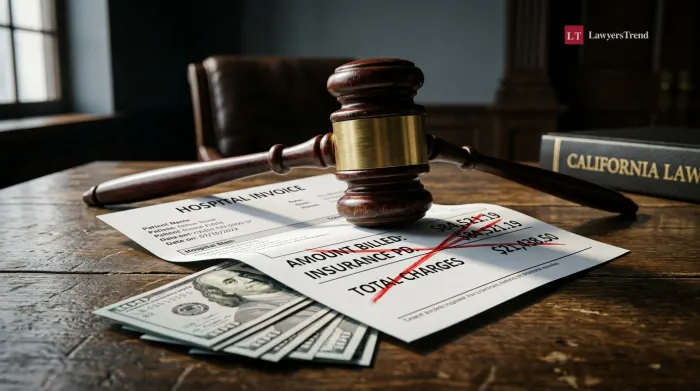
The demand letter is the right first assignment because it makes the associate build the whole case on paper before anyone is under oath. A good demand forces answers to every question that matters later: who is liable and on what theory, what the medicals prove and what they leave out, what the paid-versus-billed exposure looks like after Howell v. Hamilton Meats & Provisions, Inc. (2011) 52 Cal.4th 541, and how much coverage there is.
Begin with the statutory mechanics, because those are where a new lawyer can do real damage. Pre-litigation time-limited demands to settle within policy limits on auto, motor vehicle, homeowner, and commercial premises claims now fall under Code of Civil Procedure sections 999 through 999.5. Those sections set content and timing requirements: the demand must be in writing and labeled as a time-limited demand, must give a sufficient acceptance window, must identify the claimant and the date and location of the loss, and must include medical records or other material that supports the claim. A demand that misses those requirements may not produce the bad-faith setup the client was relying on. Have the associate draft a checklist from the statute before writing a single demand, then compare it to yours.
What the supervising attorney should red-line
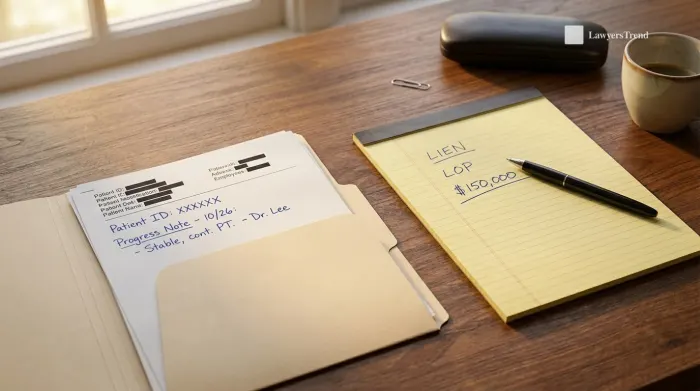
Look for three habits. The first is chronology dressed up as analysis. A demand that walks through every chiropractic visit without saying why the treatment was reasonable and causally related reads as filler to an adjuster. The second is overreaching on damages. A general-damages number with no stated basis teaches the carrier that the firm doesn't know its own case. The third is lien blindness. The associate should know before the demand goes out who holds a lien, whether the lien was properly perfected, and what the net to the client looks like. Our coverage of hospital lien notice defects makes good assigned reading here.
The exit checkpoint: the associate drafts three consecutive demands that go out with only light edits, and each one comes with a one-page memo explaining the valuation range and the biggest liability weakness.
Months Three Through Six: Deposition Preparation, Both Directions
New associates usually want to take depositions. They should defend them first, and they should prepare clients for them long before they sit next to one at the table.
Client prep is a teachable skill. The associate should sit in on two or three prep sessions run by a senior lawyer and then run one while the senior lawyer watches without stepping in until the end. The content is familiar: answer only the question asked, don't guess, ask for clarification, don't volunteer. The harder parts are specific to PI. Prior injuries and prior claims, gaps in treatment, social media, and the moment defense counsel asks what the client was doing in the minute before the collision. A client who hears those questions for the first time on the record gives answers that end up quoted in the defense mediation brief.
Teach the procedural framework alongside the soft skills. Code of Civil Procedure section 2025.290 limits a deposition to seven hours of total testimony, with listed exceptions that include expert witnesses and some complex cases. The associate should know which exceptions apply before conceding extra time. They should also know the witness's right to review and correct the transcript under section 2025.520, and they should put that review on the calendar instead of letting the window pass.
Taking the first deposition
Around month five, give the associate a low-stakes deposition to take: a records custodian, a percipient witness with limited knowledge, or an adverse driver in a clear rear-end case. Require a written outline organized by the elements and jury instructions they will need at trial, not by the order of events. The checkpoint question for the debrief is simple: which answers from this deposition will you read to a jury, and which CACI instruction does each one support? If the associate can't answer, the deposition was a conversation, not discovery.
Use the same stage to teach calendar discipline. Every deposition produces deadlines: notices, motions to compel, transcript review, expert designation timing under Code of Civil Procedure section 2034.210 and the related sections. A first-year who learns to work from the firm's calendar system instead of personal memory will avoid most of the errors described in our piece on limitations docket control redundancy.
Months Four Through Eight: Watching Mediations Before Running One
Mediation is where most PI cases resolve, and it's where first-years are least prepared, because none of it is taught in law school and the rules of the room are mostly unwritten. Have the associate observe at least four mediations before handling one, ideally with different mediators and different carriers.
Start with confidentiality, because a new lawyer can get it wrong in ways that hurt the client. Evidence Code section 1119 makes mediation communications and writings confidential and inadmissible, and the California Supreme Court in Cassel v. Superior Court (2011) 51 Cal.4th 113 held that the protection covers private communications between a client and their own counsel during mediation. Since 2019, Evidence Code section 1129 has required counsel to give the client a written disclosure about mediation confidentiality and get the client's signed acknowledgment before the client agrees to mediate. The associate should own that form on every file they touch.
What to watch for in the room
Give the observer a written assignment for each session. Record the opening demand and offer and every move after, with the time. Note when the mediator first gave a "mediator's view" of value and how both sides reacted. Identify which defense argument actually moved the number, which is rarely the one featured in their brief. Watch how the senior lawyer handled the client during the long stretches of waiting, because client management in hour five is the real skill being taught.
The checkpoint: the associate writes the mediation brief for a case they have worked, and the senior lawyer edits it the way a mediator would read it, looking for whether it gives the mediator something to use with the carrier.
Months Eight Through Twelve: The First Solo Trial
Plenty of firms never give a first-year a solo trial, and the associate's growth stalls because of it. Lawyers who have tried a case value cases differently, write demands differently, and prepare clients differently. The question is which case and how much support.
Choose the case for the associate, not for the docket. Good candidates are soft-tissue auto cases with clear liability and a modest specials figure, limited-civil matters, or cases where the defense has made a lowball statutory offer and the downside risk is contained. Steer clear of disputed-liability cases with a sympathetic defendant, anything with significant future medicals or a Medicare set-aside issue, and anything where a bad result would hurt a client who has no other recovery.
The support structure
"Solo" should mean the associate handles every witness, every objection, and every argument. It should not mean they prepare alone. A good structure includes a mock voir dire and opening in front of firm staff at least two weeks out. It includes a full review of the motions in limine and jury instructions by a senior lawyer, since those are where first-time trial lawyers lose cases they should have won. It includes a partner who is reachable during breaks, but not seated at counsel table, so that jurors see the associate as the lawyer in charge. And it includes a mandatory settlement conference prep session that treats the conference under California Rules of Court, rule 3.1380 as a real chance to resolve the case, not a box to check.
The checkpoint is not the verdict. It is a written post-trial memo, prepared within two weeks, covering what the associate would change about the demand, the deposition outlines, and the mediation position in light of what the jury did. That memo is what turns one trial into a better approach to every file that follows.
What Supervisors Get Wrong
The most common mistake is compressing the sequence because the associate seems capable. A sharp first-year who skips the mediation-observation stage will still settle cases, but they will settle them at the carrier's number, because they never watched how a senior lawyer held a position through a mediator's pressure. The second mistake is giving feedback only on outcomes. A demand that happened to settle may still have been badly built, and the associate will repeat the flaw on a case where it matters.
The Return on a Deliberate First Year
The stages build on each other on purpose. An associate who has written forty demands knows which facts carry value. One who has defended a dozen depositions knows which facts survive questioning. One who has watched mediations knows how those facts become a number, and one who has tried a case knows what a jury does with all of it. Firms that put a new lawyer through that sequence in twelve months end up with an attorney who can value a file on the day it arrives. Firms that skip it tend to find out what was missing years later, usually on a case that mattered.