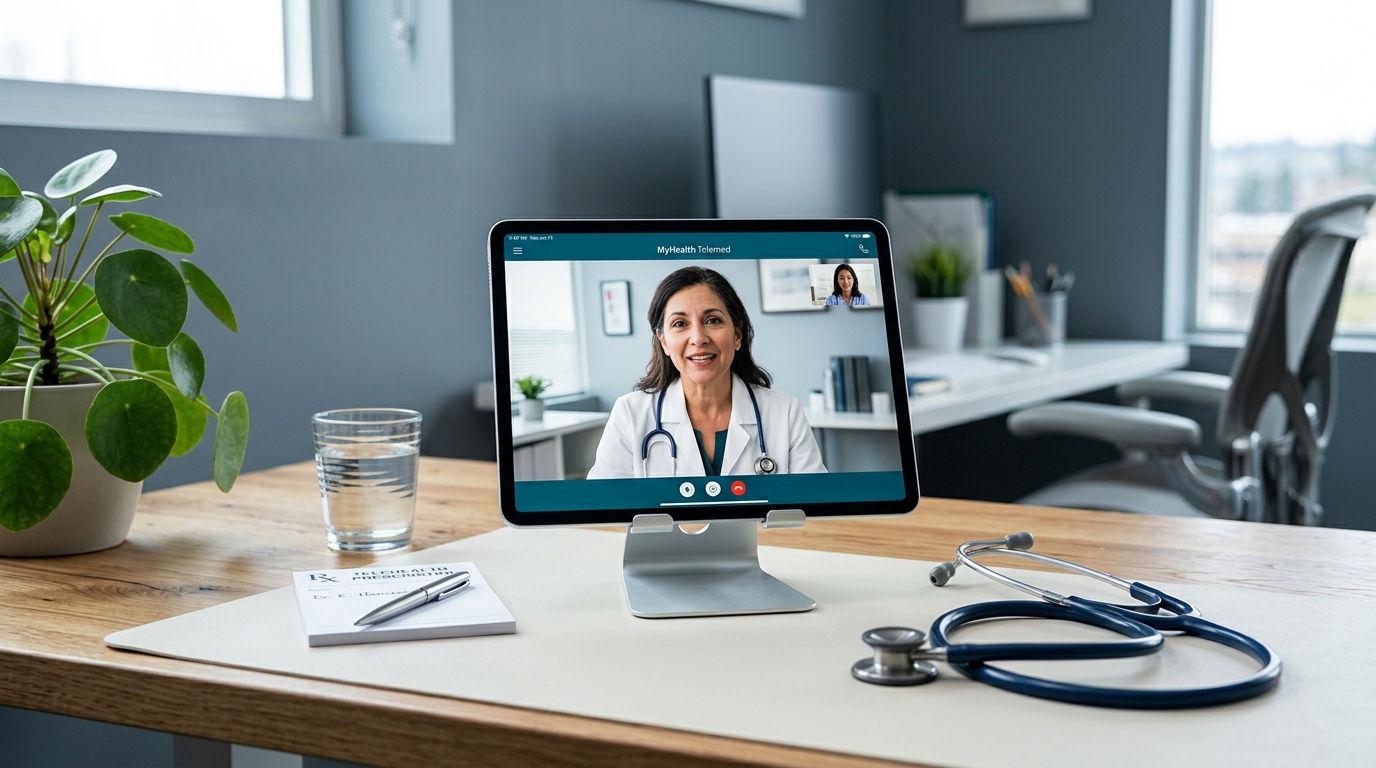
Five years after telemedicine became unavoidable, the technology has settled into a permanent place in personal injury treatment. Initial new-patient visits still happen in person almost universally, but follow-ups, medication management, pain-management check-ins, and certain behavioral-health components of PI care are increasingly handled remotely. For lien-based providers and the PI counsel who refer to them, the rules of the road are now mostly clear — but they still differ meaningfully state to state, payer to payer, and CPT code to CPT code.
This is a practitioner-level snapshot of where telemedicine sits in the PI lien-care world in 2026.
What Visit Types Are Actually Happening Remotely
Across the lien-medicine market, the working pattern looks roughly like this:
- In person: first new-patient evaluations, procedural visits (injections, manual manipulation, in-office imaging review), and any visit requiring physical examination beyond what a video call supports.
- Hybrid: physical therapy and chiropractic care, where the early-treatment-plan visits are in person but check-in and home-program adjustment visits often go remote.
- Mostly remote: pain-management medication-management follow-ups, neuropsychology follow-ups, behavioral-health components, and some post-surgical follow-up visits where the physical examination is limited.
The split is driven less by clinical preference than by what bills cleanly and what doesn't. Where telehealth is reimbursed at parity with in-person care and where lien-based billing follows the same rules, providers offer it more freely.
CPT Codes and Billing Mechanics
The 2024-2025 CPT updates introduced a new family of telehealth-specific codes (98000-98007 for audio-video and 98008-98015 for audio-only visits) that replaced or supplemented the use of office E/M codes with modifier 95. As of 2026, lien-based providers in California and most other states are billing telehealth visits with one of three approaches:
- Standard office E/M codes (99202-99215) with the appropriate place-of-service code and modifier 95 for audio-video.
- The newer telehealth-specific CPT family (98000-98015) where the payer/lien arrangement supports them.
- Audio-only codes where the visit was telephone-only, which still carries reimbursement-rate penalties in many contexts.
For PI lien purposes, billing approach matters less than documentation. The treating provider's note should clearly indicate the visit modality, the platform used (where required by state regulation), and the elements of the visit that were possible to evaluate remotely.
State-by-State Regulatory Landscape
Telehealth coverage and consent rules still vary significantly. As of 2026, the key axes are:
- Cross-state practice: the Interstate Medical Licensure Compact (now ratified in 41 jurisdictions) has eased provider licensure across state lines, but a provider treating a patient physically located in a state where the provider is not licensed still typically requires either compact registration or specific state permission.
- Consent requirements: some states require separate written consent for telehealth; California and most western states accept verbal consent documented in the chart.
- Audio-only allowances: after the federal flexibilities of 2020-2024 expired, audio-only coverage tightened in some states but remained in place in others through state-level statutes.
- In-person follow-up triggers: some pain-management protocols (especially involving controlled substances) require periodic in-person visits regardless of what insurance or lien arrangements would otherwise allow.
For PI plaintiff's counsel referring an out-of-state client to a lien-based provider, the licensure question is the first thing to verify — not the last.
Documentation for the Demand Letter
Telehealth visits that are not clearly distinguished from in-person visits in the bills sometimes get scrutinized harder by defense counsel and adjusters. The fix is preventative: when building the demand letter's specials section, the firm should:
- Mark each telehealth visit in the itemized table with a clear label.
- Attach the corresponding telehealth chart note as an exhibit when the volume of telehealth visits is meaningful.
- Have the treating provider available to explain, in any pre-litigation or deposition context, why specific visits were appropriate to handle remotely.
The defense playbook on telehealth specials is to argue that the visit was “just a phone call” and therefore should be valued at a lower rate or excluded entirely. Where the provider can articulate what was clinically accomplished and the documentation supports it, that argument doesn't go far. Where the documentation is thin, it lands.
What's Coming
- Medicare's permanent telehealth rules. The Medicare flexibilities introduced during the public-health emergency have been extended multiple times. The 2026 final rule is expected to make the geographic-restriction waiver permanent for certain services — which would, indirectly, push commercial and lien-based payers to follow.
- Lien-based reimbursement parity. Several state PI plaintiff bars have lobbied for explicit telehealth-parity provisions in state lien statutes. Whether they pass remains to be seen.
- Tooling consolidation. The platform fragmentation of the 2020-2022 telehealth surge has slowed; most lien-based providers are now on one of a handful of HIPAA-compliant video platforms. That makes documentation and chart-pulling easier when cases settle or go to litigation.
For lien-acceptance details on providers operating in the telemedicine space, browse the LawyersTrend directory.