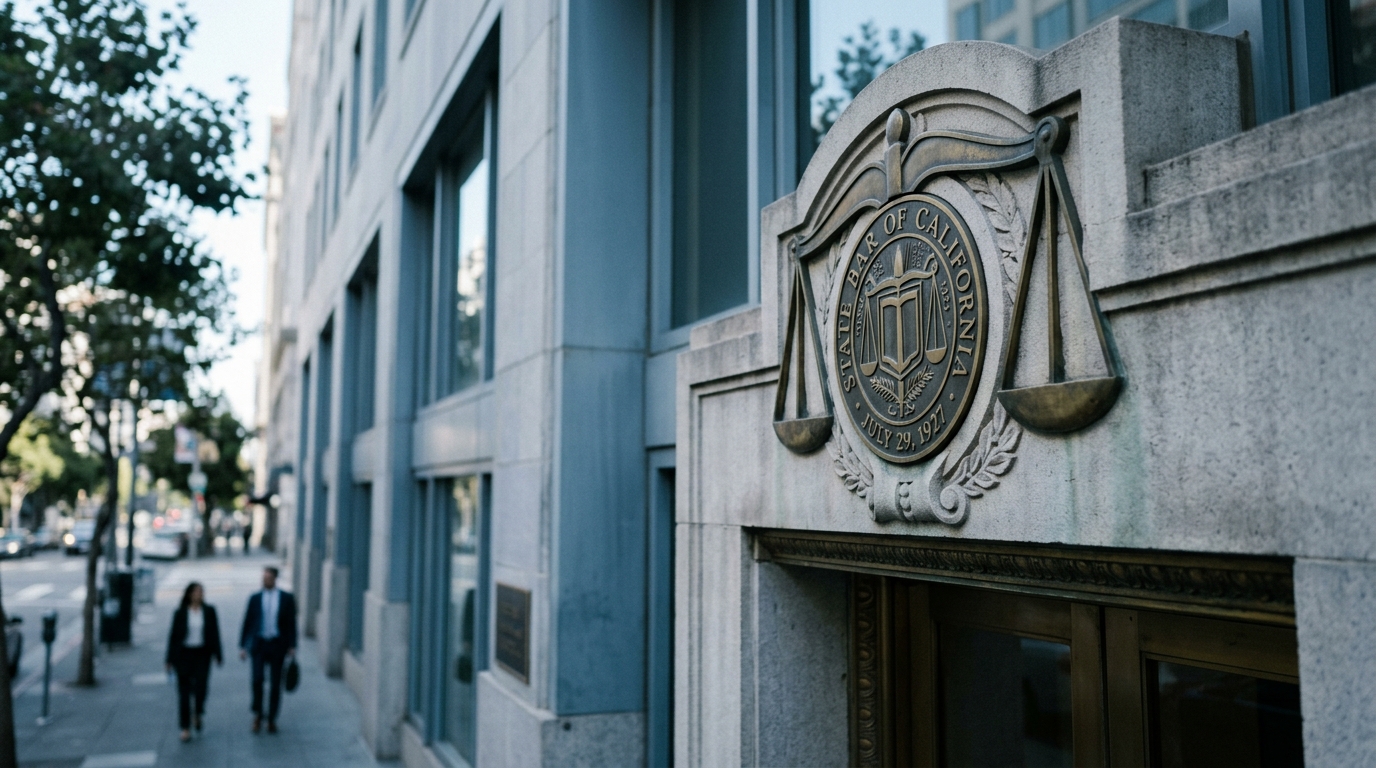
The State Bar of California's annual member demographic data tells a story most managing partners at plaintiff PI firms already feel in their hiring pipeline. Active membership keeps growing in raw numbers, but the curve underneath — who is coming in, who is still working files, and who is quietly winding down a practice — is reshaping how PI shops staff cases, train associates, and price contingency risk.
This piece pulls together what the recent membership reports signal for plaintiff personal injury practice in California: where the retirement wave concentrates, where new bar passers are actually landing, and how the talent math is changing for firms that try cases rather than just sign them up.
The Shape of the Bar Right Now
Active California bar membership sits above 195,000, with annual additions from the July and February exam administrations layered on top of a graying population of senior practitioners. The bar's own demographic surveys have, for several years, shown that attorneys over 60 make up a meaningful slice of the active roster — a share that rose sharply through the 2010s when 1970s and 1980s admittees hit traditional retirement age.
What is different now is the bottom of the funnel. Cut scores have moved, the bar transitioned toward the NextGen exam framework, and graduate flows from California-accredited and ABA-accredited schools have not kept pace with attrition at the senior end. The result is a membership chart that looks healthy in total, but increasingly hollow in the 50-to-65 cohort that traditionally carried complex injury cases through trial.
Where the Retirement Bulge Hits Hardest
Inside plaintiff PI, the retirement curve concentrates in a few specific places. First, senior solo and small-firm trial lawyers — the practitioners who built books in the 1980s and 1990s by trying liability cases against insurance defense panels — are stepping away. Many never built succession plans, and a fair share are selling case inventory rather than the firm itself, because the goodwill in a personal-brand contingency practice does not transfer cleanly.
Second, lien negotiators and senior paralegals with twenty-plus years of Medi-Cal, ERISA, and hospital lien institutional knowledge are retiring alongside the attorneys they worked for. Firms acquiring those case books inherit the files but not the working relationships with carrier adjusters and lien resolution counsel. That gap shows up immediately in net client recovery, especially on cases governed by California's hospital lien framework under Civil Code sections 3045.1 through 3045.6, where carrier-side institutional memory dictates how aggressive the opening reduction offer comes in.
Third, the trial bar itself is thinning. California's plaintiff trial verdict count has not collapsed, but the same names appear on the verdict reports year after year, and the pipeline of attorneys who have actually picked a jury in a contested liability case is narrower than the active membership number suggests. The pattern matters because case valuation depends on the credible threat of trial — a point sharpened by recent verdict pattern data from the first half of 2026, which shows continued separation between firms with trial-ready bench depth and those that rely on settlement pressure they can no longer back up.
Where New Associates Are Actually Going
The first-year associate market in California PI has tightened in the opposite direction most observers expected. Despite headline growth in mass tort and aggregated litigation, the share of new admittees taking plaintiff PI jobs out of school has not risen proportionally. Several reasons combine.
Defense-side insurance carriers and managed-care firms still recruit aggressively at the J.D. level, offering W-2 stability, structured training programs, and predictable hours that compete well against contingency-firm associate compensation. Mass tort plaintiff shops — many headquartered outside California but staffing California cases — pull off the top of the new-grad cohort with origination-track compensation that traditional single-event PI firms cannot match.
The associates who do land at California single-event PI firms increasingly come from two pipelines: clerkships at plaintiff-side appellate practices, and lateral moves from insurance defense after two to four years. The second pipeline has become the dominant source of mid-level talent. It produces associates who understand carrier reserves, claims handling timelines, and defense file structure — useful skills, but skills that take additional training to convert into plaintiff-side case development instincts.
The Trial-Lawyer Skill Gap
The gap most managing partners describe in candid conversation is not associate headcount. It is courtroom-ready third- and fourth-year talent. Associates can be hired. Associates who have sat second chair on a contested liability trial, taken an expert deposition that held up under Sargon-style gatekeeping scrutiny, and argued a contested motion in limine are scarce.
Part of this is structural. California's superior courts are still working through case-clearance backlogs, civil trial dates push out twelve to twenty-four months in several counties, and many cases resolve at mandatory settlement conference or through private mediation rather than trial. Associates accumulate billable years without accumulating trial reps. The senior partners who could have supervised those reps are the same cohort now retiring.
Local trial-lawyer associations have taken on more of the training load. SCCTLA in the Bay Area and analogous county-level groups across the state run trial skills programs, mock-trial weekends, and mentor-pairing arrangements that try to close the gap. Whether they close it fast enough to match the senior-end attrition is the open question facing the next two hiring cycles.
What This Means for Case Origination and Referrals
The membership shift changes referral economics. Senior solos historically were the connector class — they sent cases up to specialist trial firms when liability got complex or damages exceeded their comfort threshold. As that cohort exits, those upstream referrals are being captured by intake-driven platforms, lead aggregators, and direct-to-consumer marketing operations rather than by the next generation of small-firm practitioners.
For trial firms that depended on a stable referral pipeline from named-attorney solos, the next several years will require explicit cultivation of younger referring counsel. That means structured co-counsel arrangements, transparent fee splitting that complies with California Rules of Professional Conduct rule 1.5.1, and contingency fee agreements that paper the referral cleanly. The compliance side has gotten less forgiving — a point worth pairing with current Business and Professions Code section 6147 fee agreement requirements, where a defective referring-counsel disclosure can put the entire fee at risk.
The retirement wave also shifts who answers the phone on the carrier side. Adjuster turnover, supervisor retirement, and consolidation of claims operations have produced a defense-side counterpart phenomenon: institutional memory loss at the carriers. Plaintiff lawyers who built reputations with specific adjusters and house counsel may find those relationships have evaporated. Settlement value is being re-anchored case by case rather than by relationship history.
Practical Hiring Adjustments for the Next Two Cycles
Several adjustments are showing up across California plaintiff firms responding to the demographic shift.
Compensation packages are stretching. Mid-level associate salaries at the larger contingency firms have moved up materially, and origination-bonus structures are being offered earlier in associate tenure to compete with mass-tort recruiting.
Training has moved in-house and become formalized. Firms that previously left associate development to osmosis are running structured deposition programs, expert-prep curricula, and supervised motion practice. The investment is being justified as a retention tool, not only a skill-building one.
Succession planning has become an active practice management topic at firms that ignored it ten years ago. Buy-sell agreements, deferred-compensation structures for senior partners, and case-inventory valuation methodologies are getting more attention. California Rule of Professional Conduct 1.17 sets the framework for sale of a practice, but most firms still treat the documentation as overdue.
Lateral hiring from defense practices has become a deliberate sourcing channel rather than an opportunistic one. Several plaintiff firms have built explicit recruiting relationships with insurance defense shops that lose associates to the contingency side every cycle.
What the Numbers Are Telling Us
The State Bar's membership curve is not a five-alarm warning. It is a slow signal — the kind that lets firms adjust hiring, training, and succession over several years if they read it correctly, and the kind that punishes firms that wait. The combination of senior-end retirement, slow new-admittee intake into single-event PI, and a thinning trial-experienced middle is not going to reverse on its own.
Firms that hold their position over the next decade will read the demographic data the same way they read carrier reserve patterns: as inputs to case selection, staffing, and pricing. The ones treating the bar as a stable supply of talent are working from a number that no longer describes the practice.