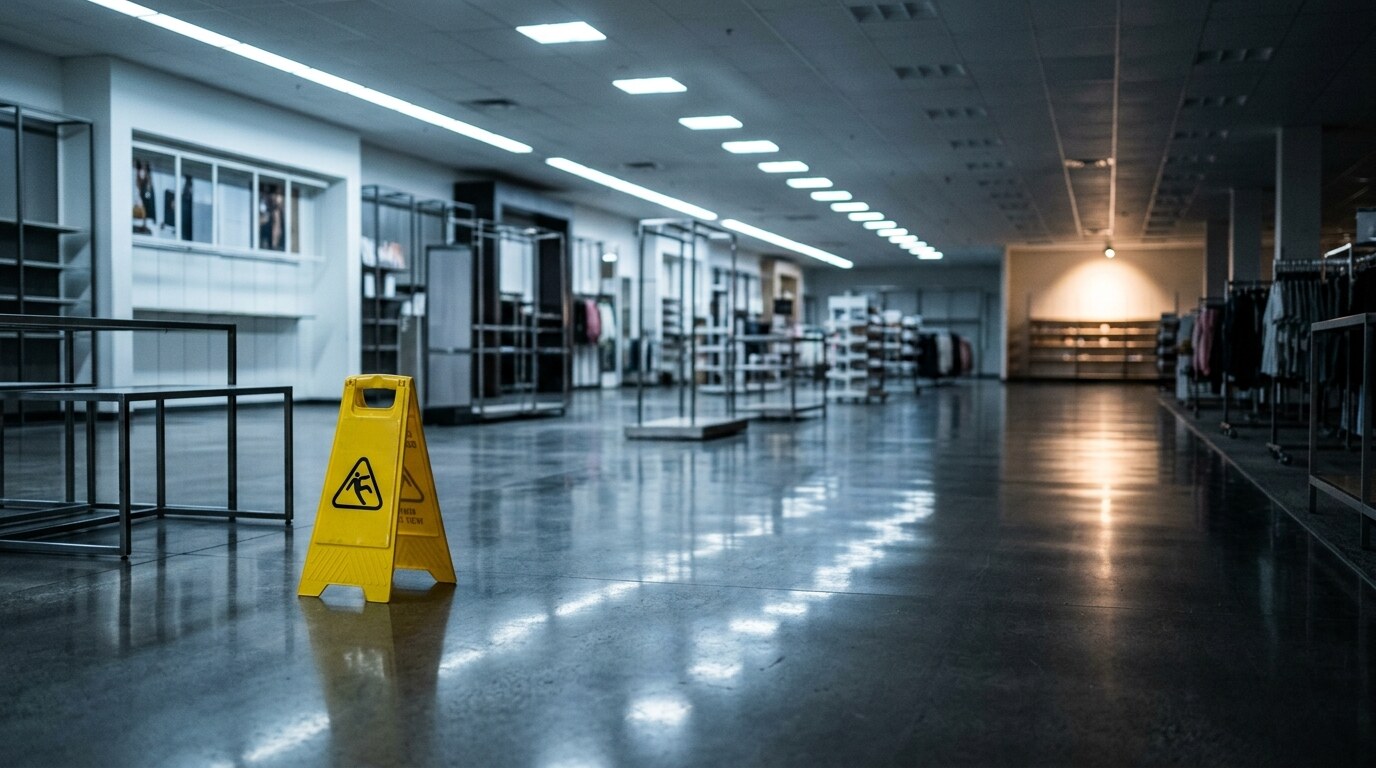
Every premises-liability plaintiff eventually hits the same wall: notice. The defense wants the case to turn on whether the owner knew, or should have known, about the specific puddle, grape, or spill that put the client on the floor. Win that element and the case has value. Lose it and summary judgment closes the file. There is a category of premises case, though, where the notice burden largely dissolves, and too many plaintiff lawyers plead around it instead of into it. That is the mode-of-operation rule.
What the rule actually changes
Mode of operation shifts the analytical frame. Instead of asking whether the owner had notice of one particular hazard, it asks whether the owner adopted a method of doing business that, by its nature, foreseeably generates recurring hazards. Where it applies, the plaintiff no longer has to prove the defendant knew about the exact hazard at the exact moment. The recurring risk supplies the foreseeability that the notice element usually carries.
The doctrine grew out of self-service retail. When a grocery lets customers handle loose produce over a hard floor, dropped grapes are not a freak event, they are a predictable cost of the sales model. The New Jersey Supreme Court made the point in Nisivoccia v. Glass Gardens, Inc., where loose grapes near a checkout supported a mode-of-operation instruction because the store's own display method invited spillage. Massachusetts landed in the same place in Sheehan v. Roche Bros. Supermarkets, adopting the rule for self-service settings and rejecting the idea that a shopper must time-stamp a spill to recover.
Where it reaches beyond the produce aisle
The useful move in 2026 is arguing the rule outside the grocery context that produced it. Any operation that hands the customer a task the staff used to perform tends to qualify. Self-service drink stations, salad and hot-food bars, buffet lines, warehouse-club sampling, self-checkout bagging zones, and garden-center watering areas all put foreseeable debris on the floor as a function of design. The question is not whether the specific defendant is a supermarket. It is whether the defendant chose a model that predictably scatters hazards in a defined zone and then declined to police that zone on a reasonable interval.
That framing matters because it tells you where to stand your ground. You are not trying to prove how long the substance sat. You are proving that the hazard was the foreseeable output of the operation, that it fell within a zone the owner should have anticipated, and that the owner's inspection cadence was unreasonable given the known risk.
Proving the operation, not the puddle
The evidence shifts accordingly. Instead of hunting for a single employee who walked past the spill, you build a picture of the system:
- The store's own inspection and sweep logs, which reveal the actual interval between floor checks against the traffic in that zone.
- Prior incident reports and claims in the same area, which show the risk was recurring and known at the operational level.
- Corporate policies and training materials describing how the self-service feature is supposed to be staffed and cleaned.
- Staffing records for the shift, which often show the department was short a person when the fall happened.
Surveillance is the linchpin, and it disappears fast. Send the litigation-hold letter before the store's retention cycle overwrites the file, and demand not just the clip of the fall but the hours before it, which prove the inspection gap. When a defendant cannot produce footage it controlled, the spoliation argument does real work. We cover the mechanics of that preservation fight across our premises-liability coverage.
The limits, and the states that closed the door
The rule is not a national free pass, and pretending otherwise gets cases dismissed. Two constraints matter most.
First, several jurisdictions have narrowed the doctrine to hazards tied directly to the self-service feature. New Jersey's later decisions, for instance, declined to extend mode of operation to spills unconnected to a customer-handled product, so the plaintiff still has to link the hazard to the operation itself, not merely to the premises generally.
Second, some states legislated the rule out of existence. Florida's Section 768.0755, enacted after the produce-slip cases, requires a plaintiff injured by a transitory foreign substance in a business to prove the establishment had actual or constructive knowledge of the condition. That statute effectively displaced the older burden-shifting approach in Florida and forces the plaintiff back onto temporal proof. Know your forum before you build the theory, because the same facts that win in one state lose on the pleadings in another.
Pleading it early
Mode of operation is easiest to lose by waiting. Defendants move for summary judgment on the classic notice framing, and a plaintiff who has not developed the operational record has nothing to answer with. Plead the theory from the complaint, take the corporate deposition on inspection systems and staffing, and put the sweep logs and prior incidents in front of the court before the motion. Treat it as a burden-shifting argument you must earn with evidence, not a label that does the work by itself.
What it is worth
The doctrine does not raise damages, but it changes which cases survive to a damages conversation. A slip case that dies on notice is worth nothing; the same case reframed around a foreseeable operational hazard reaches a jury. That is the difference between a nuisance-value file and a real one, and it is why the theory belongs in the first draft of the complaint rather than the opposition brief. For practitioners tracking how these premises theories interact with settlement posture, our case-law analysis and practice-operations coverage follow the trend lines.