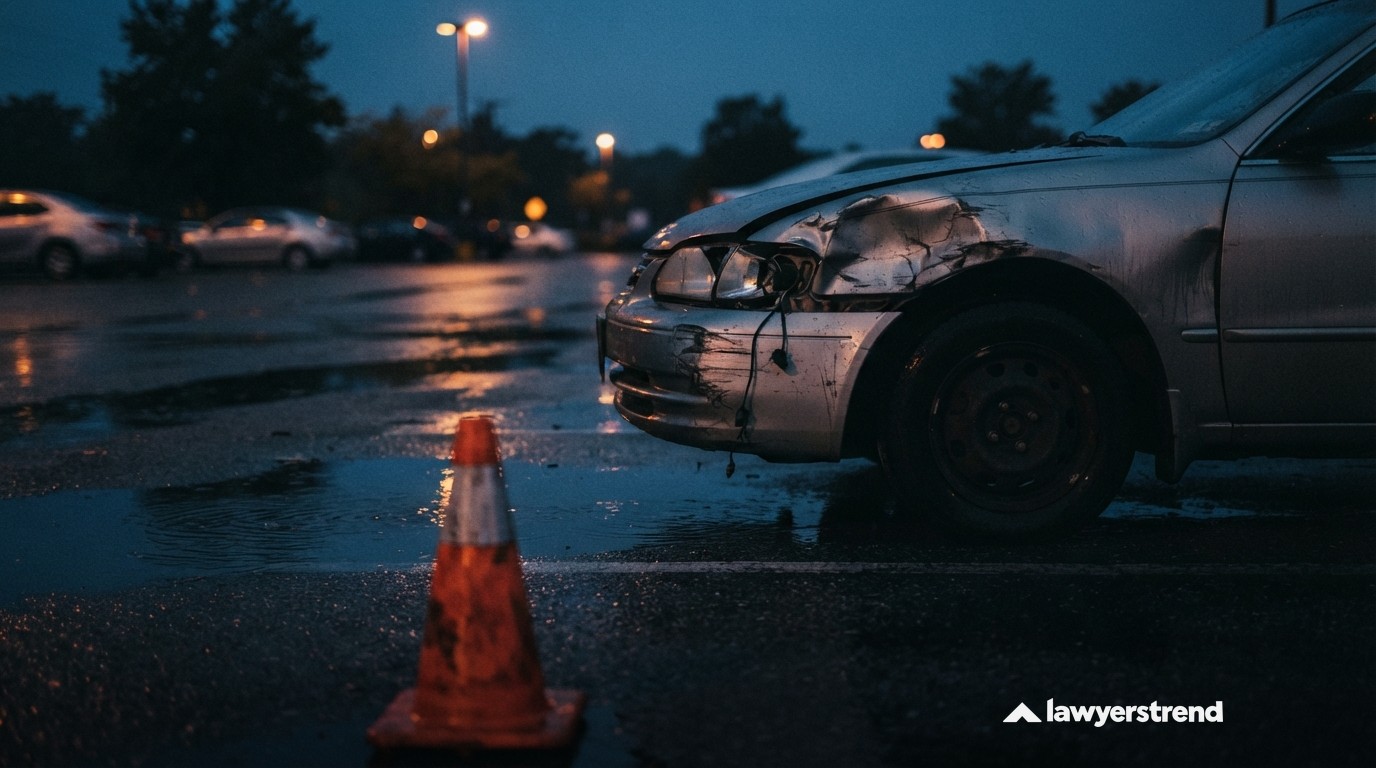
A three- or four-car chain-reaction crash looks simple from the outside. Traffic slowed, someone failed to stop, and the cars accordioned together. Inside the file, it is anything but simple. Each driver blames another. Each carrier argues its insured's impact caused little of the harm. The plaintiff, often sitting somewhere in the middle of the chain, may have been struck more than once and pushed into the vehicle ahead. Recovering full value requires reconstructing the sequence, attributing the injuries, and making the allocation work across several policies.
Two crash patterns
Chain-reaction crashes generally take one of two forms, and the distinction matters for liability.
Single initiating impact
In the first pattern, the vehicles ahead had stopped safely, and a single driver at the rear failed to stop and struck the last car, pushing it into the next, and so on. Liability typically falls primarily on the rear driver. The drivers in the middle were stopped and did nothing wrong. The main defense arguments are sudden emergency, mechanical failure, or that a middle vehicle stopped unreasonably short.
Sequential independent impacts
In the second pattern, multiple drivers each failed to stop. The second car hit the first, then the third car, also following too closely, hit the second. Each impact reflects separate negligence. This pattern produces multiple liable defendants and more complicated injury attribution, because the plaintiff may have been hit by two different negligent drivers at different moments.
Determining which pattern occurred is the first liability question. Witnesses often cannot say. Physical evidence and vehicle data usually can.
Reconstructing the sequence
The evidence that establishes sequence and timing includes:
- Event data recorders. Modern EDRs record pre-crash speed, braking, and accelerator data along with delta-V for each impact event. Vehicles struck more than once may record multiple events with timestamps, which directly show whether impacts were simultaneous or separated.
- Vehicle damage. Front and rear crush patterns on middle vehicles show the relative severity of each impact. A car with heavy rear damage and minor front damage was likely pushed, while one with significant front damage may have struck the car ahead under its own momentum.
- Dashcam and nearby video. Increasingly common and often decisive.
- Scene evidence. Rest positions, debris fields, and skid marks.
- Driver statements. Statements to police at the scene often describe whether the speaker felt one or two impacts.
Secure EDR downloads from every vehicle in the chain, not just the plaintiff's. Middle vehicles' EDRs often contain the most useful data, and those vehicles are frequently totaled and salvaged within weeks.
Attributing the injuries
When a plaintiff is struck by more than one negligent driver, each defendant will argue its impact caused little of the injury. This is where many chain-reaction cases lose value.
Many jurisdictions follow the principle, reflected in the Restatement and in a substantial body of case law, that where the plaintiff's injuries are indivisible and cannot reasonably be apportioned between successive impacts, the defendants may be jointly liable for the entire harm, and the burden shifts to the defendants to prove apportionment. Whether and how that rule applies depends on the forum's joint and several liability statutes. In states with several-only liability for non-economic damages, the jury will allocate fault, and each defendant pays only its share.
Medical and biomechanical testimony should address whether the injuries can be attributed to specific impacts. In many cases, the honest answer is that a cervical disc injury or a concussion cannot be traced to one impact rather than another when they occurred within seconds. That testimony supports indivisibility. Where one impact was clearly more severe, the defense will use biomechanics to argue the lesser impact caused nothing; the plaintiff's expert should be prepared to explain why the combined forces, not each in isolation, produced the injury.
The presumption against the rear driver
Most states recognize, by statute or case law, a presumption or strong inference that a driver who rear-ends another vehicle was negligent, typically for following too closely or failing to keep a proper lookout. In a chain-reaction case, the presumption can apply at each link. A middle driver who struck the car ahead is not automatically excused because they were also hit from behind; the question is whether they had already struck the vehicle ahead before being pushed, or were propelled into it. Sequence evidence answers that.
Coverage across multiple carriers
Chain-reaction claims often involve three or more liability carriers, each with its own limits, adjuster, and negotiation posture. Practical points:
- Open claims with every carrier whose insured may share fault.
- Expect each carrier to make an offer reflecting a low allocation to its insured. Individually reasonable offers can collectively undervalue the case.
- Consider a global mediation with all carriers present, which pressures them to agree on allocation among themselves.
- Coordinate with the plaintiff's UIM carrier early. If combined liability limits are inadequate, the UIM claim may require consent to settle with each tortfeasor.
- Watch for releases that inadvertently release other defendants or the UIM claim.
Additional coverage on UIM consent and multi-carrier negotiation appears in our auto accidents section, and settlement allocation issues are addressed in liens and settlement.
The bottom line
Chain-reaction crashes reward early, comprehensive evidence collection. Download every EDR in the chain, collect video, and document vehicle damage before cars are salvaged. Determine whether the crash was a single initiating impact or a sequence of independent failures. Develop medical testimony on whether injuries can be apportioned between impacts. And manage the carriers collectively, so that their individual low allocations do not add up to an inadequate recovery.