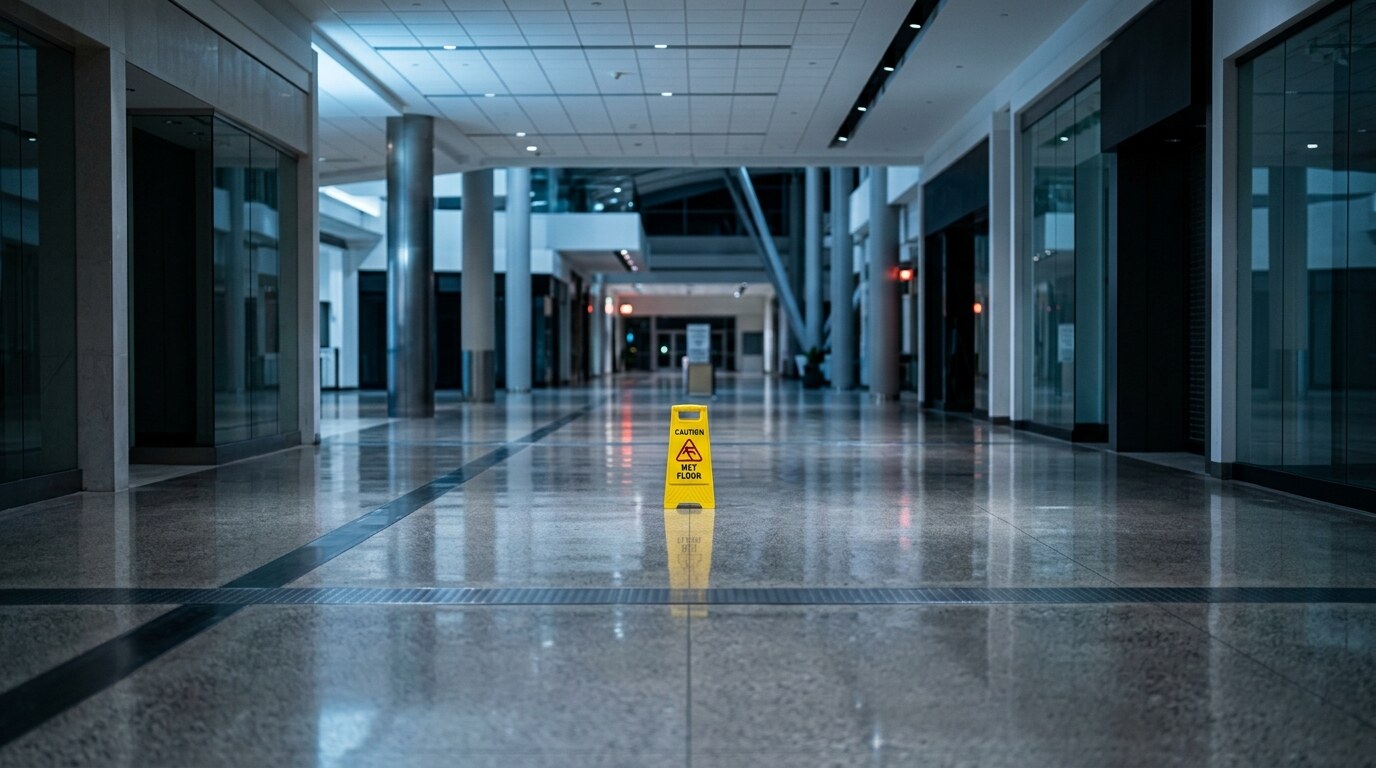
The open-and-obvious doctrine is the first thing a premises defendant reaches for, and it is often overstated. Properly understood, an open and obvious hazard does not end the case in most jurisdictions. It shifts the question from the duty to warn to the duty to maintain reasonably safe premises, and it opens the door to two exceptions that experienced plaintiff's counsel build into the file from day one.
What the Doctrine Does and Does Not Do
The traditional rule holds that a landowner has no duty to warn of a danger that is open and obvious, because the condition itself serves as the warning. That is a narrow proposition. In the many states that have adopted the modern approach, the obviousness of a hazard bears on the duty to warn and on comparative fault, but it does not automatically discharge the landowner's separate duty to keep the premises reasonably safe.
The distinction matters because most dangerous conditions on commercial property could have been fixed, not just flagged. A pallet left in an aisle, a spill near a checkout, a broken step at a store entrance, each is arguably obvious, and each was also correctable. Framing the claim around the failure to remedy, rather than the failure to warn, keeps the case alive past the obviousness argument.
The Distraction Exception
The first exception recognizes that a landowner should anticipate harm from an obvious condition when it has reason to expect the invitee's attention will be diverted. Retail environments are engineered for exactly that diversion. Merchandise displays, promotional signage, and product placement are designed to pull a shopper's eyes up and toward the shelves, away from the floor.
Develop the distraction with the store's own design. Photographs of the aisle showing eye-level displays above a floor-level hazard, the retailer's merchandising standards, and testimony that the layout was intended to draw attention to the products all support the argument that the defendant should have anticipated a shopper would not be looking down. The condition may be obvious in a vacuum and still create a foreseeable risk in the environment the defendant built.
The Deliberate-Encounter Exception
The second exception applies when the landowner has reason to expect the invitee will proceed despite the obvious danger because the advantages of doing so outweigh the apparent risk. The classic fact pattern is the only available path. A customer who must cross a hazard to reach an exit, a restroom, or the sole accessible route has not made a free choice to encounter it.
This exception frequently decides cases involving parking lots, single-entrance stores, and workplaces where a person has no realistic alternative to the hazardous path. The proof is often architectural: show there was no reasonable alternative route, and the obviousness of the danger stops being a defense.
How Obviousness Feeds Comparative Fault
Even where obviousness does not defeat duty, it reappears as comparative fault, and that is where the real fight usually lands. The defense will ask the jury to assign a large share of responsibility to a plaintiff who saw, or should have seen, the danger. Meet it with the same exceptions: a distracted or channeled plaintiff is less at fault than one who ignored a plainly avoidable risk.
- Anchor the maintenance failure first, so the jury sees a correctable hazard the defendant chose to leave in place.
- Use the store's layout and traffic patterns to explain why a reasonable person would not have been watching the floor.
- Preserve the plaintiff's own account of why the encounter was unavoidable or unexpected.
The order matters. A jury that first understands the defendant could have fixed the hazard is far less receptive to the argument that the plaintiff should have dodged it. Our premises liability coverage keeps returning to that sequencing because it drives the fault allocation.
Build It Early
The open-and-obvious fight is won in early investigation, not at trial. Preserve the scene photographs and store video before they cycle out, secure the retailer's merchandising and safety policies in discovery, and lock in the plaintiff's description of the display, the lighting, and the available paths while the memory is fresh. Those steps convert an obvious hazard into a foreseeable one the defendant should have addressed. The appellate courts continue to refine where the exceptions apply, which we track in our case law and settlements reporting, and the intake discipline that captures this proof is a recurring theme in our practice operations coverage.