When the California Supreme Court decided People v. Sanchez (2016) 63 Cal.4th 665, the immediate subject was a gang expert in a criminal prosecution. The ruling's reach turned out to be much broader. California Courts of Appeal have applied its hearsay analysis in civil cases, and personal injury trial lawyers now plan expert testimony around it. A life care planner, accident reconstructionist, or retained physician who simply tells the jury what the medical records or the police report say can create reversible error.
What Sanchez decided
Before Sanchez, California courts often allowed experts to describe the basis for their opinions, including hearsay, on the theory that the material was offered not for its truth but to explain the opinion. A limiting instruction told the jury to consider it only for that purpose.
The Supreme Court rejected that framework for case-specific facts. The Court distinguished between two kinds of information an expert might discuss:
- Background information and general knowledge in the expert's field. An expert may rely on and relate this kind of information, including hearsay sources such as treatises and professional literature, as has traditionally been allowed.
- Case-specific facts. Facts about the particular events and participants in the case at hand. If an expert relates case-specific hearsay to the jury as true and as a basis for the opinion, the statements are being offered for their truth. They must then be independently proven by competent evidence or fall within a hearsay exception.
The Court made clear that experts may still rely on hearsay in forming opinions and may tell the jury in general terms that they did so. What they cannot do is recite inadmissible case-specific hearsay as true. The criminal portion of the opinion also addressed confrontation clause issues, which do not apply in civil cases, but the state-law hearsay holding applies regardless of the type of case.
Why it matters in PI trials
Personal injury cases are built on expert testimony that draws heavily on case-specific records: medical charts, billing records, police reports, witness statements, and deposition testimony of other witnesses. Sanchez requires counsel to ask, for each fact an expert will rely on, how that fact will get into evidence independently.
Common problem areas include:
Treating and retained physicians
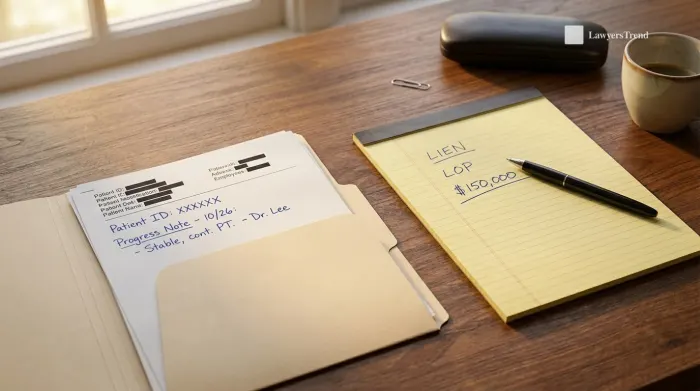
A retained orthopedist reviewing the chart may want to tell the jury what an emergency physician, a radiologist, or a prior treater found. If those findings are case-specific hearsay and are not otherwise in evidence, the expert cannot relate them as true. Medical records produced with a custodian declaration may satisfy the business records exception for some content, but diagnoses and opinions in the records can raise separate hearsay and foundation issues. Plan how each key record will be admitted, and consider which treating physicians need to testify themselves.
Accident reconstructionists
A reconstructionist who relies on witness statements in a police report, or on a police officer's conclusions about speed or point of impact, faces a Sanchez challenge if those statements are not otherwise admitted. Physical evidence, scene measurements, and vehicle data the expert collected personally are on stronger footing.
Life care planners and economists
Life care planners rely on treating physician recommendations for future care. If the planner tells the jury that a surgeon recommended a future revision surgery, that recommendation is case-specific. The surgeon's own testimony, or another admissible source, needs to establish it. The economist then relies on the life care plan, which itself must be supported by admissible evidence.
Billing experts
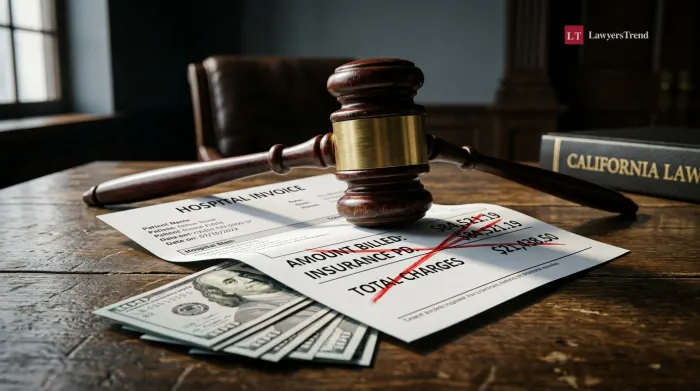
Testimony on the reasonable value of medical services depends on the billing records and payment data. If the underlying bills are not properly in evidence, the expert's summary may be vulnerable.
The defense side of Sanchez
The rule cuts both ways. Defense experts routinely rely on records of prior injuries, prior claims, social media content, and surveillance reports. If the defense biomechanical engineer or IME physician relates case-specific facts from those sources that are not otherwise admitted, plaintiff counsel should object. A defense expert who tells the jury about a prior injury documented only in an unauthenticated record is a classic target.
Trial preparation checklist
- Map every expert's case-specific facts. For each expert, list the case-specific facts they will rely on, and identify the admissible source for each one.
- Lock in foundation for records. Use custodian declarations, deposition testimony, or live witnesses to admit medical and billing records. Address any hearsay-within-hearsay issues in advance.
- Decide which treaters testify. Where a treating physician's diagnosis or recommendation is essential, plan to call the treater or use deposition testimony.
- Order of proof. Where possible, present the fact witnesses and records before the expert who relies on them, or obtain a ruling allowing the evidence to be connected up later.
- Prepare experts on the distinction. Experts should know how to state that they relied on records generally without reciting inadmissible content, and how to ask hypothetical questions grounded in admitted facts.
- File motions in limine. Seek rulings on the defense experts' reliance materials before trial.
Hypotheticals still work
Sanchez preserves the hypothetical question as a tool, as long as the facts in the hypothetical are supported by evidence admitted at trial. An expert can be asked to assume facts that other witnesses have established and to give an opinion based on those assumptions. That approach is often cleaner than having the expert narrate the record.
Relationship to Sargon
California's expert gatekeeping rule under Sargon Enterprises v. University of Southern California focuses on whether an expert's reasoning is supported by the material relied on. Sanchez focuses on what the expert can tell the jury about that material. A damages expert can survive a Sargon challenge and still create a Sanchez problem at trial. Prepare for both. Our recent analysis of gatekeeping is available in the case law and settlements section.
Bottom line
The rule is simple to state: experts can rely on hearsay, but they cannot be the vehicle for case-specific hearsay the jury would not otherwise hear. The work is in preparation. Plan the foundation for every key fact, use treating physicians and records custodians deliberately, and hold the defense experts to the same standard. Practice tips on trial logistics appear in our practice operations coverage.